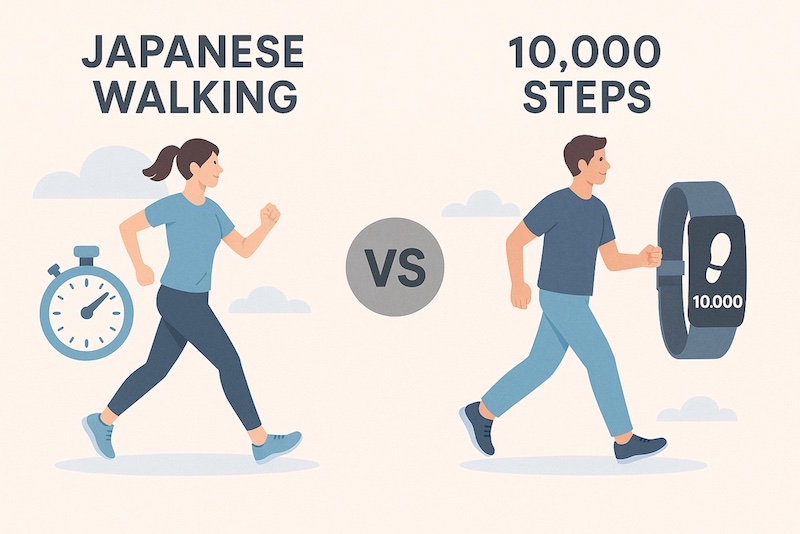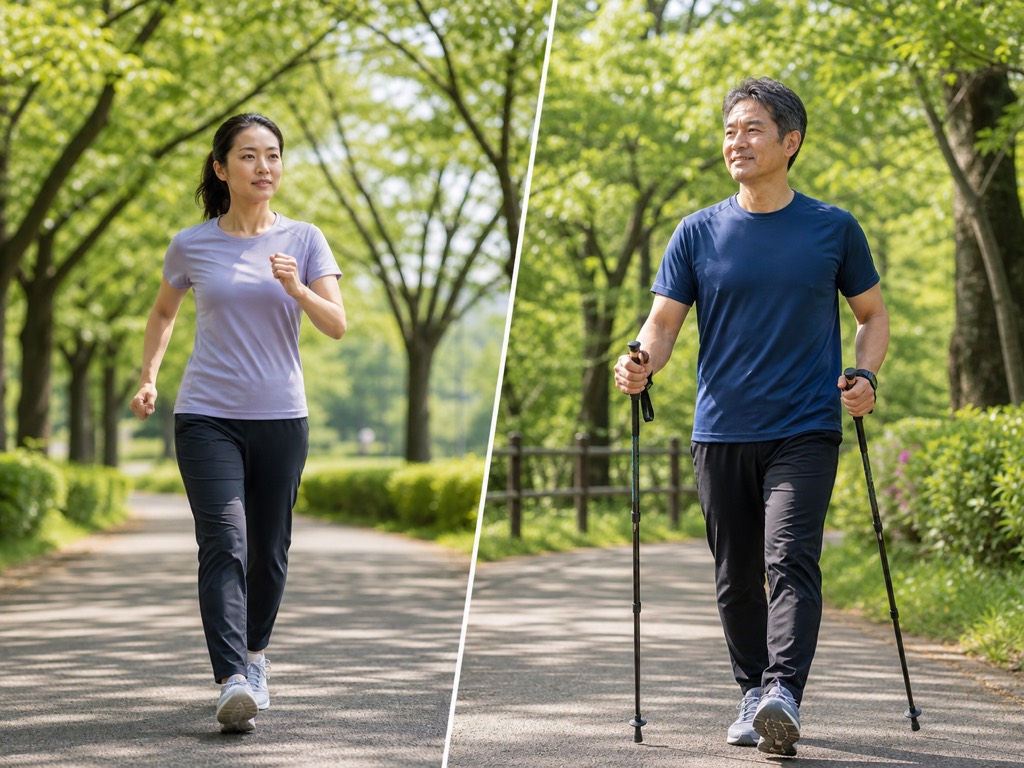
If you are stuck choosing between Japanese walking and Nordic walking, the annoying answer is also the useful one: the better option depends on what you want the walk to do for you. These are not the same workout. Japanese interval walking is a structured pace-changing session. Nordic walking is a pole-assisted full-body walk. Both can be effective. They just push your body in slightly different ways.
Japanese walking, also called interval walking training, usually means alternating three minutes brisk with three minutes easy for about 30 minutes. Nordic walking keeps a steadier rhythm, but adds poles so your arms, shoulders, and trunk do more work with each stride. One method raises intensity by changing pace. The other raises whole-body involvement by changing mechanics.
So which is more effective? If your main goal is improving cardio fitness, making an easy walk feel more purposeful, and getting a clear brisk-versus-easy structure without special gear, Japanese walking is often the simpler fit. If you want a more total-body walking workout, extra stability from poles, and a higher training load at a given walking speed, Nordic walking may suit you better. For a quick refresher on how interval walking works, start with our complete guide to Japanese walking.
Why Japanese walking can be more effective for cardio and routine-building
Japanese walking is effective because it solves a very common problem: most people say they walk briskly, but they drift back to a comfortable pace pretty fast. The interval structure fixes that. You get repeated chunks of genuinely harder walking, then a built-in recovery phase before the next push. That makes the session easier to repeat than one long sustained hard walk, but usually more demanding than a casual stroll.
The research on interval walking training is pretty solid for middle-aged and older adults. The foundational Japanese studies, plus a newer 2024 review, report benefits in aerobic capacity, some leg-strength measures, blood pressure, body composition, and metabolic health. That does not mean it beats every other form of walking for every person. It does mean the method has more direct evidence behind its exact pattern than most trendy walking formats floating around online.
There is also a practical advantage here: Japanese walking is simple to dose. You can use the CDC talk test to make sure your brisk segments feel meaningfully harder than your easy ones. During the brisk parts, talking should get harder. During the easy parts, you should recover enough to do the next round with decent form. That clear contrast is the whole point. If your hard and easy segments feel the same, you are mostly just doing regular walking with a timer.
This is also why Japanese walking works well for people who like structure. You know when to push, when to back off, and when the session is done. If consistency is your weak spot, that can matter more than tiny differences in calorie math. A method you can repeat four days a week usually beats a theoretically better method that turns into garage clutter after nine days.
Why Nordic walking can be more effective for full-body workload
Nordic walking changes the workout in a different way. By using poles correctly, you spread the effort across more muscle groups and usually raise oxygen demand and heart rate compared with normal walking at a similar pace. That is why Nordic walking often feels like “walking plus” rather than just walking with accessories.
That is not just marketing copy. Reviews and controlled trials in older adults have found Nordic walking can improve aerobic capacity, dynamic balance, walking performance, and quality of life. Some studies also suggest it burns more calories than regular walking because the upper body is contributing more work. Harvard Health sums up the practical version well: the poles add muscle involvement and can make the session feel more stable for some walkers. If you want to see that mainstream medical overview, their Nordic walking article is a decent starting point.
Where Nordic walking may be especially effective is when you want more from a moderate-feeling walk without switching to jogging. The poles can help you load the session more while keeping impact relatively low. For some older adults, beginners, or people who feel a bit unsteady outdoors, that extra contact with the ground can also make the walk feel more secure. But there is a catch: you do have to learn the rhythm. Bad pole technique turns the whole thing into an expensive arm swing.
So which one is more effective for weight loss, fitness, and beginners?
For weight loss, neither method is magic. The one that helps you stay consistent, accumulate enough weekly work, and keep effort honest is usually the more effective choice. Japanese walking may be easier for people who want a simple schedule and a stronger intensity contrast. Nordic walking may help some walkers raise total effort and energy expenditure without feeling like they need to run. If fat loss is the main target, read this next: Japanese Walking for Weight Loss: How Many Calories Do You Actually Burn?
For general fitness, Japanese walking is usually the lower-friction option. You do not need poles, you do not need technique coaching, and the 3-minute brisk / 3-minute easy format gives you a clear training signal. That makes it easier to scale for busy adults who want results without adding friction. If you tend to overdo your hard segments or turn every walk into a shuffle, our guide to common Japanese walking mistakes will help you clean that up.
For beginners who want support and stability, Nordic walking can still be a very strong option, especially if a coach, class, or experienced friend can teach the pole pattern. Some people simply like it more, and that matters. Enjoyment is not fluff. Enjoyment is a compliance tool. On the flip side, if learning equipment feels like a hassle, Japanese walking is usually the faster on-ramp.
For older adults, the choice often comes down to the limiting factor. If you need help pushing intensity up safely in a structured way, Japanese walking is useful. If you want balance support and a more whole-body walking style, Nordic walking may be more appealing. Either way, start a notch easier than your ego wants. If you want a gentler entry point, our article on Japanese interval walking for seniors covers sensible modifications that also apply to many deconditioned adults.
The bottom line
Japanese walking tends to make more sense when your goal is a simple, structured cardio routine with direct evidence behind the interval format. Nordic walking often makes more sense when your goal is to turn walking into a fuller-body workout, increase workload without running, or gain some extra stability from poles. Neither one is universally better. They simply solve slightly different problems.
If you want the easiest place to start, Japanese walking is the simpler default for most readers because it is cheaper, easier to learn, and easier to progress. But if poles make you feel more engaged, more stable, and more likely to stick with your walks, Nordic walking may end up being the more effective real-world choice for you. The best plan is the one you will actually keep doing when the weather is mediocre and your motivation is not feeling heroic.