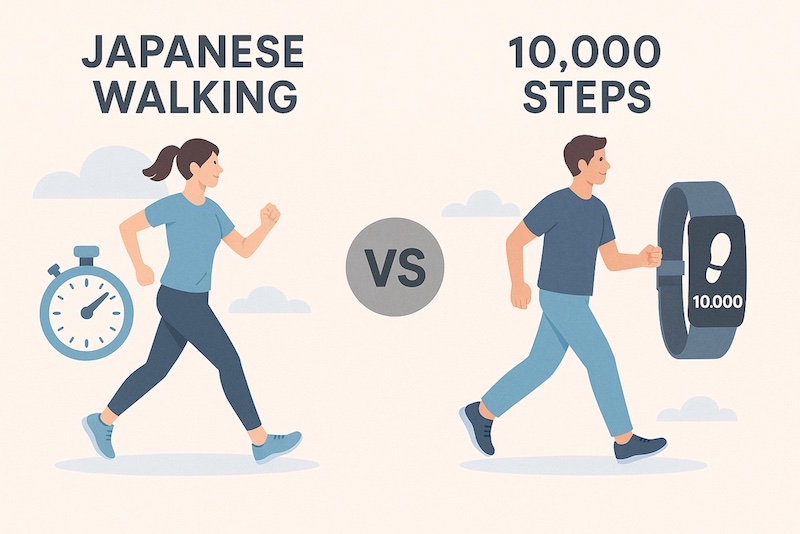
Japanese interval walking can be a very good fit for older adults. In fact, that is one reason the method got attention in the first place. The basic format is simple: walk briskly for 3 minutes, walk easy for 3 minutes, and repeat for about 30 minutes. For many seniors, that structure feels more doable than jogging and less boring than one steady pace the whole time.
But “good fit” does not mean “one-size-fits-all.” A 68-year-old who already walks daily is in a different spot than an 82-year-old with arthritis, balance issues, or heart disease. So the smart question is not just whether seniors can do Japanese walking. It is how to adapt it safely so the workout helps more than it hurts.
If you are brand new to the method, start with the basics in our complete guide to Japanese walking. Then use the modifications below to make the routine more realistic for your body, not somebody else’s.
Short Answer: Is Japanese Interval Walking Safe for Seniors?
For many older adults, yes. Japanese interval walking is low impact, adjustable, and based on walking rather than running. That matters because walking is familiar, accessible, and usually easier on the joints than higher-impact cardio. Public health guidance for adults 65 and older supports regular aerobic activity, plus strength and balance work, because those habits can help preserve independence and lower health risks over time. The CDC’s guidance for older adults recommends at least 150 minutes of moderate activity each week, muscle-strengthening work on 2 days, and balance activities, while also noting that people should stay as active as their abilities and conditions allow.
That said, “safe” depends on the starting point. If you have unstable heart symptoms, severe shortness of breath, recent falls, severe neuropathy, or an untreated balance problem, it is smarter to talk with your clinician before jumping into brisk intervals. The workout can usually be modified, but you want the green light first.
Why It Can Work So Well for Older Adults
Japanese interval walking is often described like HIIT for people who do not want the chaos. Fair enough. The fast segments push your breathing and heart rate up, then the easy segments give you time to recover before the next round. That back-and-forth matters because it can improve fitness without requiring nonstop hard effort.
The research behind interval walking is especially relevant here because several of the better-known studies included middle-aged and older adults, often with average ages around the mid-60s. In one large study of older and middle-aged adults, people who followed interval walking for four months showed average improvements in aerobic fitness, thigh strength, blood pressure, body composition, and blood glucose markers, with some of the largest changes in participants who started at lower fitness levels. If you want the actual paper, here is the PubMed record for that study.
That does not mean every senior will see dramatic changes fast. It does mean the method was not built only for already-fit people. It has evidence behind it in the population most readers here actually care about.
- Low impact: one foot stays on the ground, so joint loading is usually much lower than with running.
- Built-in recovery: the easy intervals make the session easier to tolerate than one long hard push.
- Flexible intensity: “brisk” is relative. For one person it may be 4 mph. For another, it may be a purposeful 2.5 mph with stronger arm swing.
- Helpful for function: better aerobic fitness and stronger legs can make everyday tasks feel less draining.
If your goal is simply to get consistent first, do not obsess over a perfect schedule right away. Our guide on how often to do Japanese interval walking gives a practical weekly target, but older beginners often do best by easing in below that and building up.
Best Modifications for Seniors Who Need a Gentler Start
This is where people either set themselves up well or get stubborn and make the workout harder than it needs to be. The goal is not to copy the textbook version perfectly on day one. The goal is to create a version you can repeat safely next week.
| If this is your issue | Try this modification | Why it helps |
|---|---|---|
| Deconditioned or returning after inactivity | Start with 1 to 2 minutes brisk and 2 to 3 minutes easy for 4 rounds | Reduces early fatigue and soreness while teaching the pace change |
| Balance concerns | Use a flat track, indoor corridor, or treadmill with handrails nearby if needed | Cuts down trip risk and keeps the surface predictable |
| Arthritis or joint irritation | Shorten the brisk intervals and keep stride length modest | Lets you raise effort without pounding the joints |
| Low confidence with pacing | Use the talk test instead of speed targets | Effort stays personal and safer than chasing a number |
| Fatigue after illness or hospitalization | Use fewer total rounds and add extra recovery days | Improves tolerance while you rebuild capacity |
The talk test is especially useful for seniors. During the brisk parts, you should be able to speak only short phrases, not chat comfortably. During the easy parts, breathing should settle down enough that talking feels normal again. That is usually a better target than trying to hit somebody else’s watch number.
If 3 minutes brisk feels like too much at first, that is fine. Two brisk minutes followed by three easy minutes is still structured interval walking. Some people even begin with one faster minute and two easy minutes. It may feel almost too easy, but that is better than flaming out in week one.
How Seniors Should Start the Routine Safely
A simple starter plan works better than a heroic one. Warm up for 5 minutes at an easy pace. Then do 4 rounds of brisk and easy walking. Finish with another 5 minutes easy. For many older adults, that is enough for the first week or two.
- Week 1: 4 rounds, two or three days total.
- Week 2: Stay at 4 rounds, or move to 5 if recovery feels good.
- Week 3 and beyond: Build toward the standard 30-minute routine on three to four days per week.
Choose the flattest, most predictable route you can. A park loop, school track, quiet sidewalk, or treadmill can all work. Uneven pavement is usually not worth the extra trip risk. If you want an easier way to hold the rhythm, the free Japanese Interval Walking Timer can handle the switch cues for you.
And if the full 30-minute version still feels a bit much, borrow the shorter build-up from our 14-day beginner plan. Seniors do not need a special identity around this. They just need a progression that matches current fitness.
When to Pause and Ask a Clinician First
A lot of older adults can start walking programs on their own, but there are situations where a quick medical check-in is the smarter move. That is especially true if you have chest pain with activity, unexplained dizziness, fainting, severe shortness of breath, a major recent cardiac event, or a condition that makes falls more likely.
You should also be cautious if you have diabetes with foot ulcers or numbness, advanced arthritis that flares with brisk walking, or medications that affect heart rate and exercise tolerance. None of that automatically rules interval walking out. It just means the plan may need adjustments.
During the walk itself, stop if you get chest pressure, unusual breathlessness, marked dizziness, or pain that changes your gait. That is not you “being lazy.” That is useful feedback.
The Bottom Line for Seniors
Japanese interval walking can be one of the more senior-friendly ways to do structured cardio. It is simple, low impact, and backed by research that actually includes older adults. Potential benefits include better stamina, stronger legs, and improvements in some heart-health markers, which can matter in everyday life.
The big thing is to scale it honestly. Start a little easier than your ego wants. Use flat routes. Let the brisk pace be challenging but controlled. And if you have medical red flags or balance issues, get personalized guidance before ramping up. Done that way, Japanese interval walking can be a safe and useful routine for many seniors, not just the super-fit ones.