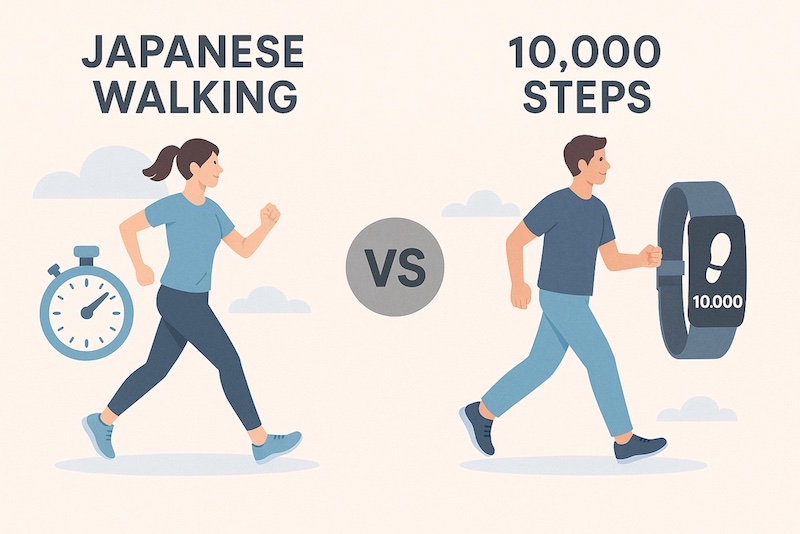
Japanese walking success stories are all over the internet now, but a lot of them are a little too neat. One person says they dropped a bunch of weight in a month. Another says their energy came roaring back in a week. Maybe that happened for them. But if you want the most honest version of what walkers have actually documented, the best place to start is not social media. It is the published interval-walking research and the long-running Shinshu University program that turned this method into more than a trend.
That matters because progress with Japanese interval walking is usually less dramatic and more useful. In the published studies, participants showed improvements in measures like leg strength, aerobic capacity, blood pressure, and long-term adherence. Those are not flashy before-and-after headlines, but they are the kinds of results that can actually matter in normal life.
If you are brand new to the method, start with our complete guide to Japanese walking. Then come back here once you want a realistic picture of what progress can look like in actual humans, not fitness-marketing robots.
Short answer: the most credible stories here are documented participant outcomes
The strongest evidence on Japanese walking comes from real participants in supervised and free-living interval-walking programs, mostly middle-aged and older adults. In the original 2007 study from Shinshu University researchers, the interval-walking group improved leg strength, peak aerobic capacity, and resting systolic blood pressure more than the steady walking group over five months. That is one version of a success story, just told through measured outcomes instead of dramatic selfies.
A later three-month study in sedentary middle-aged adults found that interval walking raised aerobic capacity and lowered resting systolic blood pressure. In a separate 22-month adherence study, average adherence was about 70%, and the participants with higher adherence showed better changes in fitness and lifestyle-related disease scores. So one documented pattern is pretty clear: the walkers who kept showing up tended to do better.
If you want the deeper research breakdown, our article on the science behind Japanese interval walking lays out the method in more detail. The key point here is that the best success stories are documented outcomes from real participants, not random hype.
What these participant outcomes suggest for ordinary walkers
This is where people sometimes get tripped up. The strongest published Japanese walking results are not really “I lost 17 pounds by Tuesday” stories. They are steadier and more practical than that. For ordinary walkers, these studies suggest that success may look more like improved fitness markers, better tolerance for brisk walking, and a routine that stays usable over time.
- Fitness can improve without fancy gear. In the Shinshu studies, participants improved aerobic capacity and leg strength with repeated brisk-and-easy walking.
- Blood-pressure changes can be part of the win. Several interval-walking studies reported lower resting systolic blood pressure, which is a much better headline than people usually give it credit for.
- Consistency may be the biggest marker of all. The long-term data are interesting because they show this routine was doable enough that some participants kept it going for years.
- Daily life may feel easier as fitness improves. That part is more practical inference than direct quote from the studies, but it is one reason better endurance and stronger legs matter in the first place.
That pattern lines up with broader public-health guidance too. The CDC notes that moderate- to vigorous-intensity physical activity can improve sleep, reduce anxiety, and lower blood pressure, including benefits that show up from individual sessions as well as from regular training. Japanese walking is not magical. It is a structured way to get more of those benefits through repeatable brisk walking.
What the long-term success stories look like
The really interesting Japanese walking stories are the long ones. Shinshu University reported that the program was still being continued by a meaningful subset of the original participants a full decade later. In that follow-up, 109 of the original 585 participants had kept exercising for 10 years, and the long-term walkers had higher endurance and leg strength than their contemporaries. That is not a crash-transformation story. It is a durability story.
There was even a participant over 90 at one Shinshu recognition event. That does not prove the method works the same way for every person, but it does underline the bigger theme here: some people found the routine manageable enough to keep in their lives for a very long time. A lot of workouts can look exciting for six weeks. Far fewer still fit into normal life years later.
If you are trying to build that kind of boring-but-powerful consistency, our guide on how often to do Japanese interval walking helps you set a weekly target that is ambitious enough to matter without becoming a second job.
Can Japanese walking help with weight loss? Maybe, but that is not the strongest documented story
A lot of readers really mean weight loss when they ask for success stories. Fair enough. Japanese walking may support weight management or fat loss for some people because the brisk intervals raise effort and energy use more than an easy stroll. But the honest answer is that body-weight results vary a lot from person to person, especially depending on food intake, total activity, sleep, medications, and starting size. The studies behind this method were stronger on fitness and blood-pressure outcomes than on dramatic body-weight change.
That is why some of the most useful outcomes here are not scale stories. They are blood-pressure stories, endurance stories, strength stories, and adherence stories. If you want a more specific look at the first month, our article on Japanese interval walking results after 30 days gives a realistic expectations guide.
In other words, do not throw out a good program just because your mirror check was underwhelming. In this research area, documented gains in fitness and health markers were often the clearer signal than appearance-based change.
Why some people get good results and others stall out
One practical reason people may stall is inconsistent or overly hard pacing. People can also struggle when the brisk pace is never truly brisk, when they only do the workout once in a while, or when they treat every session like a fitness test and burn themselves out. The original research protocol used repeated three-minute brisk efforts above a meaningful intensity threshold, done several days per week. That structure is a big part of why the method may help.
In the published research, better adherence was linked with better outcomes. That is still the most important practical takeaway for regular readers. Participants who adhered more consistently tended to show better results.
If you need proof that the method itself is legitimate, this PubMed record for the original 2007 interval-walking study is a good place to start. It is less sexy than a viral transformation video, but much more trustworthy.
Three grounded examples of what success can look like
If the article title made you expect glossy testimonials, here is the honest substitute: three patterns that were actually documented or strongly suggested by the participant data.
- The measurable-improvement story: in the 2007 and 2010 studies, participants improved aerobic capacity, and some also improved resting systolic blood pressure. That is the classic “I am objectively fitter now” version of success.
- The stick-with-it story: in the 22-month adherence data, better adherence tracked with better fitness and lifestyle-disease scores. The participants who turned the plan into a habit tended to get more from it.
- The long-haul story: in the 10-year Shinshu follow-up, a subset of participants was still doing the routine years later, with higher endurance and leg strength than their peers. That may be the most impressive result of all because it speaks to sustainability, not just novelty.
None of those patterns guarantees the same outcome for every reader. They just give you a more grounded idea of what success can actually mean with this method.
Who should be more careful with success-story claims?
If you have heart disease, uncontrolled blood pressure, severe joint pain, dizziness, balance issues, or any medical condition that makes harder walking feel risky, be more careful with internet success stories. A program can be effective and still need modifications. If brisk intervals feel medically questionable for you, it is sensible to get clinician guidance before copying someone else’s routine.
That is especially true for beginners who have been inactive for a while. Starting smaller does not mean the method failed. It usually means you are giving it a chance to work. If the full routine feels like too much right now, the 14-day beginner plan is a better starting point than forcing a version you cannot recover from.
Bottom line
The best Japanese walking success stories are not usually the loudest ones. They are the participant outcomes showing better fitness, stronger legs, lower blood pressure, and years of continued use. They are the walkers who found that a structured routine was finally doable enough to repeat. And honestly, that is the kind of result most readers need.
So yes, Japanese walking can produce meaningful results for ordinary people. Just define success a little better. If you can stick with the routine and see progress in fitness or health markers over time, that is a meaningful result. It counts a lot.