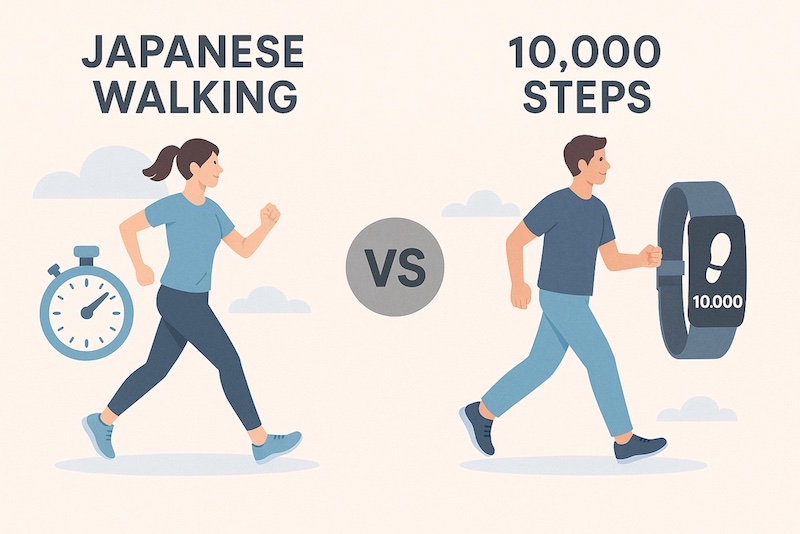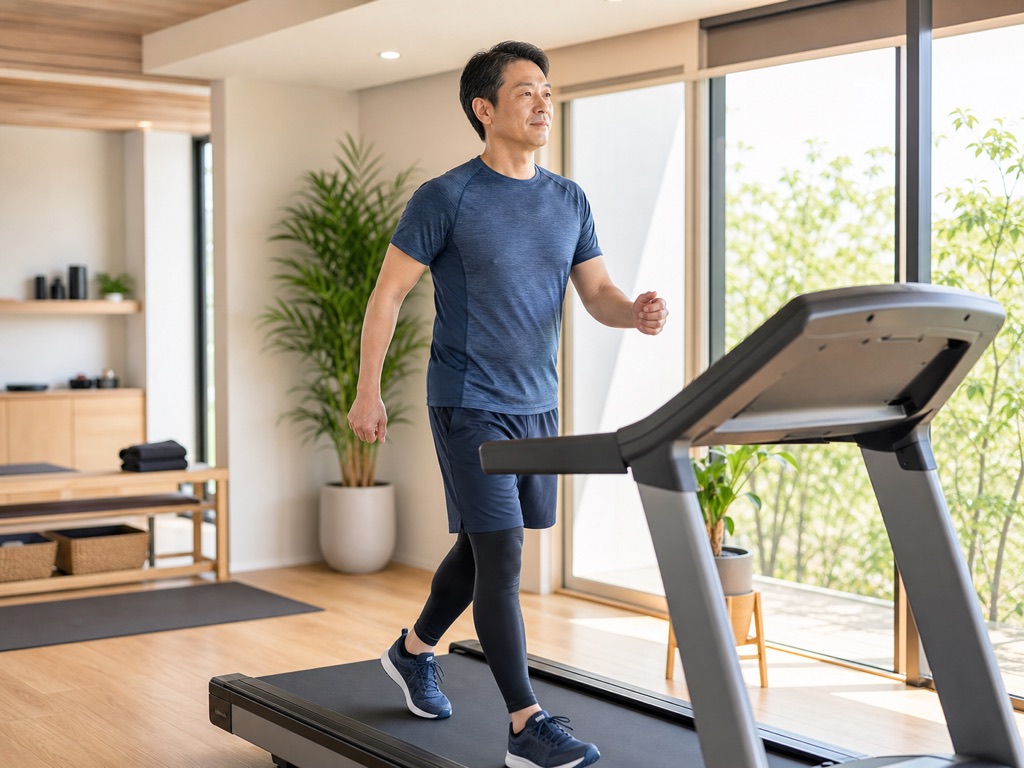
Yes, you can do Japanese walking on a treadmill. For a lot of people, it is the version they can actually stick with. Bad weather, dark mornings, rough sidewalks, and packed schedules stop plenty of outdoor walking plans. A treadmill removes a lot of that friction, which matters more than people admit.
The key point is this: Japanese interval walking is about the pattern, not the location. You still alternate 3 minutes of brisk walking with 3 minutes of easier walking for about 30 minutes. On a treadmill, the belt handles some of the pace control for you, which can make the workout feel more structured and repeatable.
If you need the full overview first, start with our complete guide to Japanese walking. If you want the short answer, though, here it is: a treadmill can be a practical way to do the Japanese walking interval pattern indoors, as long as the fast intervals feel clearly harder than the easy ones.
How to Do Japanese Walking on a Treadmill
The basic routine does not change just because you are indoors. Warm up first, then run the classic 3-and-3 pattern.
- Warm up for 5 minutes at a relaxed pace.
- Walk briskly for 3 minutes.
- Slow down for 3 minutes and let your breathing settle.
- Repeat that cycle 5 times.
- Cool down for 3 to 5 minutes.
For the brisk portions, do not chase some random treadmill number from social media. Use effort. The Centers for Disease Control and Prevention says a moderate-intensity pace is one where you can talk but not sing, while vigorous effort leaves you able to say only a few words without pausing for breath. That makes the CDC talk test a practical guide when you do not want to fuss with heart-rate zones. On the brisk intervals, speaking should feel noticeably harder than it does during recovery.
If you are still learning the feel of those pace changes, our guide on how to set your fast and slow pace by breathing helps a lot. Outdoors or indoors, that breathing shift is the whole trick.
Is Treadmill Japanese Walking as Good as Outdoor Walking?
For real-world training, it is close enough to be useful, but it is not a perfect copy of walking outside. A 2024 systematic review on treadmill versus overground walking found meaningful similarities, but also some physiological and biomechanical differences between the two. Another study in healthy older adults reported that treadmill and overground walking were broadly similar in step, stride, and joint movement patterns, even though they were not identical. So the honest answer is not “exactly the same.” It is more like “similar enough for most people, with a slightly different feel.”
That different feel is one reason a treadmill can seem awkward at first. A treadmill familiarization study in Scientific Reports found that many walking measures settled within about six minutes, while some continued adapting longer. In plain English: if the first few minutes feel a bit weird, that does not mean the workout is wrong. It usually means your stride is still adjusting to the moving belt.
There is also a practical upside here. The American Heart Association notes that where you walk, whether that is outside or on a treadmill, matters less than choosing a setup you will keep doing. That lands for Japanese walking too. If the treadmill is what gets you through regular sessions during heat, rain, pollen season, or early-dark winter evenings, that consistency is a big deal. It is not glamorous, but it works.
Best Treadmill Settings for Japanese Interval Walking
The main job of your treadmill settings is not to look advanced. It is to create a clear difference between the harder and easier intervals while keeping the session repeatable. The original interval-walking research was built around alternating low-intensity and moderate-to-high-intensity walking, not around a magic treadmill speed or incline setting.
That is why effort matters more than copying someone else’s console numbers. Choose a brisk pace that still feels like walking, use the talk test to separate hard from easy blocks, and give yourself a few minutes to adapt if the treadmill feels odd at first. Once the rhythm feels steady, the setup is probably good enough.
For a lot of beginners, the sweet spot is boring in the best way: a simple setup, a clear pace difference, and repeatable effort across all five rounds. You do not need to turn the workout into a boot-camp scene for it to qualify as Japanese walking.
Common Treadmill Mistakes That Mess Up the Workout
The biggest mistakes usually come from making the treadmill look hard instead of making the workout sustainable.
- Going too hard in the first interval, then fading by round three.
- Keeping the recovery pace too fast because slowing down feels “lazy.”
- Adding steep incline before the speed change feels under control.
- Watching the console so much that posture gets sloppy.
- Skipping the warm-up because it is “just walking.”
If you keep running into those problems, our article on common Japanese walking mistakes will probably sound uncomfortably familiar. The treadmill does not create new mistakes so much as expose the same old ones faster.
Treadmills can also tempt people to use speed as their only measure of progress. That is not always smart. A better sign is whether you can complete all five work intervals with steady form and a consistent breathing pattern. If yes, you are probably in the right zone. If no, the number on the console is not helping you.
Who Should Start More Conservatively?
If you are brand new to treadmills, ease in. Start with smaller speed jumps, fewer total rounds, or both. Once the moving-belt feeling stops being distracting, you can build toward the full session. This is especially useful if your outdoor balance is fine but treadmills still feel oddly artificial. That is common.
It also makes sense to be conservative if you have not been exercising much lately. Japanese interval walking is still walking, yes, but the brisk intervals are meant to feel purposeful. If that sounds like too much right now, begin with an easier setup and progress from there instead of forcing the “official” version on day one. Our 14-day beginner plan is a better starting place than copying someone else’s treadmill settings.
If indoor walking is your only realistic option for a while, our guide to indoor Japanese walking gives more ways to keep the routine going without overcomplicating it.
Bottom Line
Yes, you can do Japanese walking on a treadmill, and for some people it is the most practical version of the routine. The workout structure stays the same: 3 minutes brisk, 3 minutes easy, repeated for about 30 minutes. The treadmill is just the setting.
Keep the pace changes clear, let yourself adapt to the belt, and do not overthink the settings early on. Consistency matters more than creating the perfect treadmill spreadsheet. If you can repeat the session week after week, you are doing the part that actually counts.