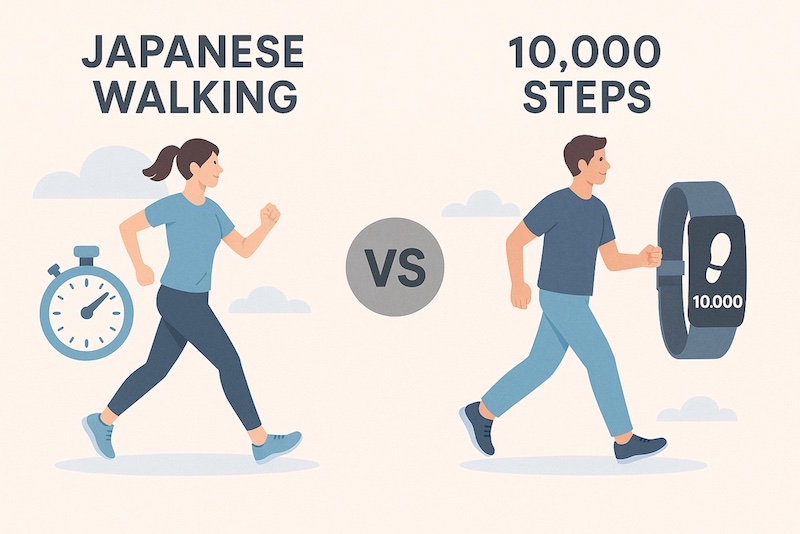
The basic Japanese walking routine works because it is simple: brisk for 3 minutes, easy for 3 minutes, repeat for about 30 minutes. But after a while, simple can start to feel a little too familiar. Your breathing settles faster, the brisk blocks stop feeling all that brisk, and progress gets murky. That does not mean the Japanese walking method stopped working. It usually means your body adapted and now needs a smarter nudge.
If you need the full foundation first, start with our complete guide to Japanese walking. If you are already doing the classic routine consistently, the next step is not to randomly make everything harder. Good progression in interval walking training is more methodical than that. You tighten the quality of the fast intervals, then expand the workload gradually, then choose harder variations that still let you recover well.
That matters because the original interval walking research was built around repeated fast and slow blocks done several days per week over months, not one heroic workout followed by three days of soreness. In the Shinshu University protocol, people repeated at least five sets of 3-minute fast and 3-minute slow walking, at least four days per week, with the fast intervals set at a clearly challenging effort. The point was repeatable training stress, not chaos.
First, make sure the “basic” routine is actually basic now
Before you progress, check whether you have outgrown the current version or just gotten a little casual with it. A lot of walkers think they have plateaued when what really happened is that the brisk intervals drifted toward medium pace and the recovery intervals stopped being true recovery.
A good fast interval in Japanese interval walking should feel purposeful. You should be breathing harder and able to speak only in short phrases, not full relaxed sentences. Your easy interval should feel genuinely easier, with your breathing settling by the end of the block. If you need help calibrating that difference, this guide on setting your fast and slow pace by breathing is the best place to reset your effort levels.
That “quality check” is boring, sure, but it is important. Published interval walking research suggests the higher-intensity walking time is a major driver of improvement, especially in the middle-aged and older adults studied most often. So before you add extra rounds or hills, make the fast intervals honest again. In plain English: do not solve a pacing problem with volume.
Progression Rule No. 1: Add intensity by effort before you add more time
The safest first progression is usually not a longer workout. It is a better fast interval. Keep the 3-minute easy blocks the same and make the brisk blocks a bit sharper. That can mean quicker arm swing, a longer stride only if it feels natural, a slightly faster cadence, or a flatter route where you can hold rhythm without interruptions.
If you are using the talk test, your brisk interval should land around “I can talk, but I would rather not.” That lines up pretty well with how the CDC describes moderate-to-vigorous effort using the talk test. If you are still chatting comfortably through the whole brisk block, you probably are not progressing yet. You are just repeating.
This is also why technology is optional. A watch can help, but the real question is whether there is a clear contrast between your fast and slow work. If your brisk pace has gotten lazy, bringing that contrast back may be enough to restart progress without changing the session length at all.
Progression Rule No. 2: Build volume slowly, not all at once
Once the brisk intervals feel honest again, then you can add a little more work. The cleanest way is to change one variable at a time:
- Add one extra 6-minute round, turning a 30-minute session into roughly 36 minutes.
- Add one more training day per week if you currently do fewer than four sessions.
- Keep the same number of rounds but shorten the warm-up drift between blocks by staying focused on the pace change.
Pick one of those, not all three in the same week. Public-health guidance still matters here. Adults are generally advised to build toward at least 150 minutes of moderate-intensity aerobic activity per week, plus muscle-strengthening work on two days per week, according to the CDC adult activity guidelines. Japanese walking can absolutely help you reach that target, but more minutes are only helpful if the sessions stay repeatable.
If you have been doing the routine just two or three times per week, progressing your weekly frequency may help more than stretching one session into a marathon. That is one reason our article on how often to do Japanese interval walking matters so much. Consistency is still the main engine.
Progression Rule No. 3: Use terrain and route design carefully
Hills, inclines, bridges, wind, and softer surfaces can all make the same interval structure harder. That is useful, but only when you use it on purpose. A gentle incline during the brisk segments can raise the demand without forcing you to run. For many people, that is the best “advanced” version of the Japanese walking method.
The catch is that terrain can also wreck your recovery. If your easy interval is uphill too, it may stop being easy enough to prepare you for the next brisk block. So use route progression with some common sense. A flat route is best for judging pace. A rolling route is better once you already know what your brisk effort should feel like.
If your joints get cranky on harder routes, do not force it. A cleaner pace difference on flat ground beats a sloppy suffer-fest on hills. Progression should make the workout more effective, not more random.
Progression Rule No. 4: Match the next step to your actual goal
Not every plateau needs the same fix. Someone training for general health may only need one extra round and a firmer brisk pace. Someone chasing better stamina may benefit from a longer total session once or twice per week. Someone focused on body composition may get more out of keeping the interval walking sessions sharp while also adding strength work.
That is where goal-based programming matters. If you care about overall fitness rather than just surviving a harder walk, read our guide on combining Japanese walking with strength training. Adding some resistance training can improve your broader exercise base without turning every walking day into a max-effort event.
For brand-new walkers, though, “advanced” often just means becoming consistent enough to handle the original plan. If that is you, do not skip ahead. Our 14-day beginner plan is still the better progression path than pretending you need expert-level tweaks already.
A practical 4-week progression plan
If the basic 5-round routine feels comfortable and you recover well between sessions, this is a reasonable way to progress without getting silly:
- Week 1: Keep 5 rounds, but push the brisk intervals to a more definite “short phrases only” effort.
- Week 2: Keep that stronger brisk pace and add a sixth round to one session this week.
- Week 3: Do two sessions with six rounds, while the other sessions stay at five.
- Week 4: Either keep two six-round sessions or keep one six-round session and use a mild incline during one other workout.
Notice what is not happening here: you are not adding rounds every workout, doubling your weekly days, and turning every fast interval into a death march. Progression should feel noticeable, not reckless. If recovery gets worse, sleep gets worse, or your easy intervals stop feeling easy by the second half of the workout, back off and hold the current level for another week or two.
Signs you progressed too aggressively
This part gets ignored way too often. More challenge is only useful if you can adapt to it. You probably progressed too fast if:
- your fast and slow intervals blur together because you cannot recover
- your pace falls apart by the third or fourth brisk block
- you feel unusually wiped out for the rest of the day
- small aches in the feet, shins, knees, or hips keep hanging around
- you start skipping sessions because the workout suddenly feels like a chore
That last one matters more than people think. The original interval walking studies were built on adherence over time. A slightly easier program you can repeat four days a week beats a spicy “advanced” plan you abandon in eight days.
Bottom line
To progress beyond the basic Japanese walking routine, first make sure your brisk intervals are truly brisk again. After that, add workload gradually by changing just one variable at a time: pace quality, rounds, weekly frequency, or terrain. The best advanced version of interval walking training is not the hardest one. It is the one that keeps your effort contrast clear, your recovery intact, and your weekly consistency high.
If you treat progression like a steady build instead of a dare, Japanese walking can keep delivering useful results for a long time. That is the real win. Not just doing more, but doing more on purpose.